

From Marketers to Distribution Engineers: How Crypto Marketing Jobs Are Changing in 2026
If you’re still thinking about crypto marketing as content creation, you’re already behind

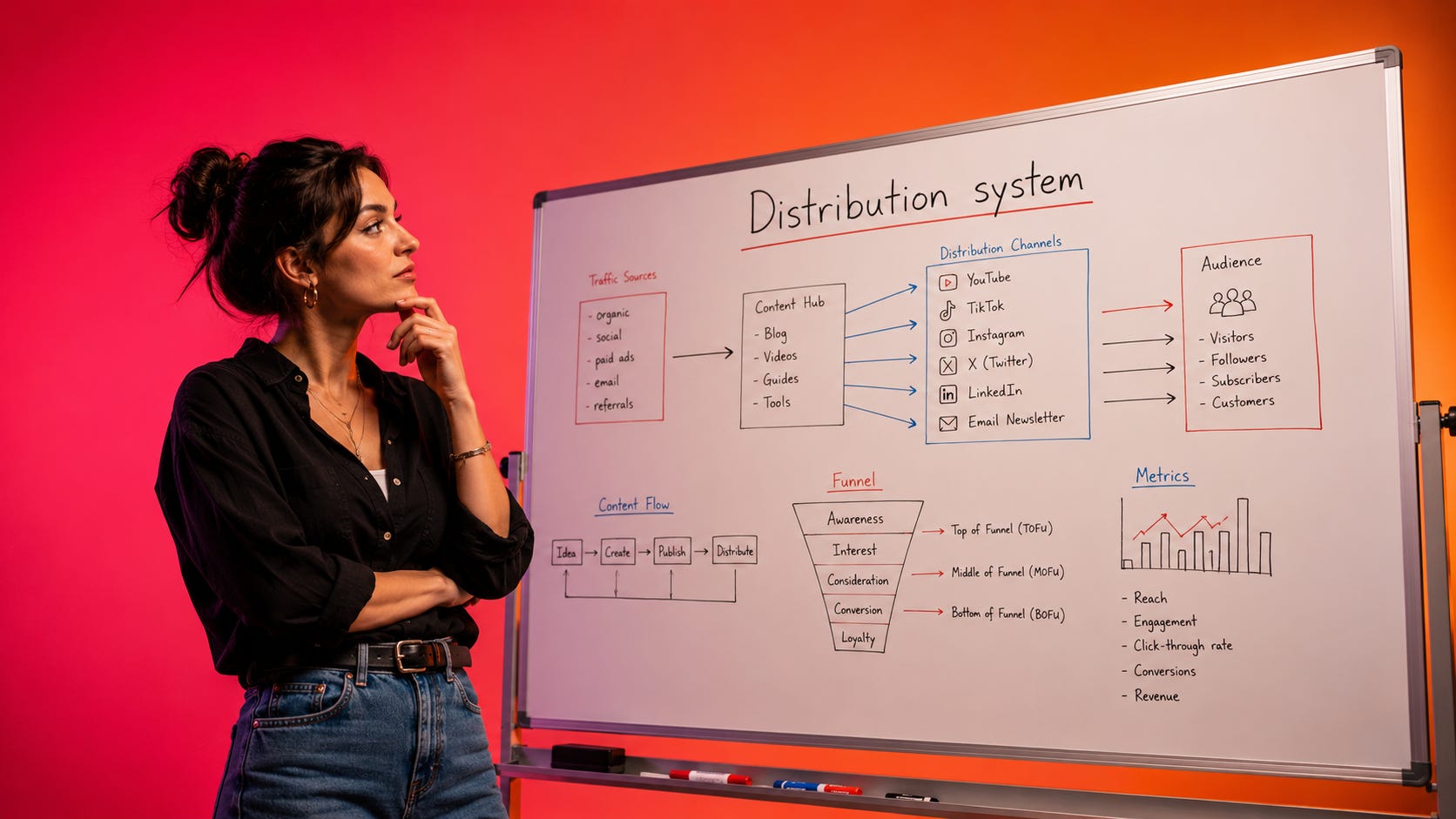
If you’ve been in crypto marketing for more than five minutes, you’ve seen the pattern. Project launches with a bang. Twitter thread goes semi-viral. Discord hits 10k members in a week. The community manager posts memes, the team ships updates, the Telegram is buzzing.
Then, three months later: ghost town.
The content didn’t stop. The announcements kept coming. Someone was still posting. But nothing was actually reaching anyone anymore, and nobody on the team could explain why.
Here’s why: they had a content operation. They didn’t have a distribution system. And in 2026, those two things are not even remotely the same.
We’ve been calling it the wrong thing for years
The term “crypto marketer” has always been a bit of a mess. In practice, it’s meant copywriter, community manager, hype machine, growth hacker, and occasional chaos coordinator, all wrapped into one (usually underpaid) hire who’s expected to solve the problem of nobody caring about your protocol.
But the actual problem was never content. There’s more content in crypto than any human being could consume in a lifetime. The problem has always been distribution. Who sees it, when, on which channel. And whether it lands with the right people or disappears into the void.
Most crypto marketing teams are still operating on the 2021 playbook: post on Twitter, blast the Telegram, drop a blog article, repeat. That playbook worked when the market was going up and attention was plentiful. It does not work when you’re fighting for mindshare in a crowded, mature, deeply skeptical ecosystem.
The marketers who are actually moving the needle right now are going beyond creating: they’re engineering the distribution, and there’s a real difference.
Distribution engineering is a systems job
What does a distribution engineer actually do? They think in systems, not campaigns.
A campaign asks: what should we say? A distribution system asks: who needs to hear this, where do they actually spend their attention, what format works in that context, and how do we make sure the message gets there reliably?
That shift sounds simple but it’s not because it requires a fundamentally different mental model for what marketing work is.
A distribution engineer is building and maintaining infrastructure. Owned channels - email lists, newsletters, long-form content that compounds over time, community hubs you actually control. These are assets. An X following you don’t own is simply a rented audience that can disappear the moment an algorithm changes or a platform implodes. (Reminder: it’s happened before, multiple times. It’ll happen again.)
This means treating channel-building as a product problem. What does the reader/subscriber/community member get from being in your ecosystem? Why should they opt in and stay?
The best crypto projects in the current cycle are showing up on platforms . They’re building owned media that outlasts any one market moment. Newsletter lists, subscriber bases, communities that have been nurtured with actual value - these are the things that survive a bear market, not memes on twitter.
The algo is part of your stack now
Here’s something a lot of crypto marketers still treat as someone else’s problem: the mechanics of how content actually travels.
Every platform you’re using has an algorithm. That algo has rules. For the most part, those rules are not secret: they’re discoverable, they shift over time, and understanding them is now a core marketing competency. Not a bonus skill. A requirement.
X rewards controversy and engagement velocity. LinkedIn rewards consistency and professional framing. YouTube rewards watch time and click-through rate. Each of these is a different distribution system with different physics. If you’re copying and pasting the same message across all of them, you’re doing distribution wrong.
A distribution engineer maps these mechanics. They know why an X thread performs on a Tuesday morning and dies on a Friday afternoon. They understand why a post framed as a question outperforms the same post framed as an announcement. They’re not just making content but making content that’s engineered to travel through a specific system.
This doesn’t mean gaming algos cynically. It means respecting the medium. It’s the difference between a filmmaker who understands how cinema works and someone who just points a camera at things.
On-chain data and AI are not optional add-ons
The other half of the distribution engineering job that most crypto marketers are still sleeping on: the data layer.
On-chain data is a valuable marketing asset. You can see who’s interacting with your protocol. You can segment by wallet age, transaction history, portfolio composition, cross-protocol behavior. You can build audience profiles that are more precise than anything X ever gave you, and you don’t have to ask a platform’s permission to access them.
Teams are using on-chain signals right now to identify power users before they churn, to time campaigns around liquidity movements, to personalize onboarding flows based on what a wallet has already done. That’s distribution intelligence, and it’s the difference between shouting into the void and talking to the right person at the right moment.
Then there’s AI. And no, I’m not talking about using ChatGPT to generate captions. I’m talking about using AI systems to handle the operational layer of distribution: monitoring sentiment across platforms, identifying distribution windows, personalizing content at scale, flagging when community behavior is signaling something your team needs to act on. The AI content flood is already making generic output worthless. The competitive edge now is using AI to run distribution infrastructure, not to replace the strategic thinking behind it.
The marketers who treat these tools as add-ons are going to lose to the ones who’ve baked them into their operating model.
The industry hasn’t caught up and that’s your opportunity
Let’s be honest about where we are. Most crypto marketing teams are still structured around the 2021 model. Hire a community manager, a content writer, maybe a part-time KOL coordinator, and call it a marketing function. The output is activity instead of distribution and growth.
This is a systemic problem. Projects treat marketing as a communication job when it’s actually an infrastructure job. The CMO who can architect a distribution system (owned channels, algorithmic understanding, data intelligence, AI-powered operations) is a fundamentally different hire than the one who’s good at writing announcements.
The gap between those two profiles is wide. And right now, the market is not pricing it correctly, which means there’s opportunity on both sides. For marketers: if you develop these skills, you’re not competing in the same pool as everyone else. For projects: if you build a team that thinks in distribution systems, you have an actual structural advantage over the majority of the field still running 2021 playbooks.
The role is changing whether the industry acknowledges it or not. The ones who make the shift early don’t just survive the next cycle. They own it.
Have thoughts on this? Disagree with something? I want to hear it - drop a comment below or reply to this email. The best conversations happen when someone pushes back.
And if your project is trying to figure out how to build a real distribution system instead of just making noise, that’s exactly the kind of problem I work on, get in touch for a free consultation and let’s talk.